I think a lot about what we buy, what we keep, and what we discard. Lately, I’ve been consumed by a different question: what happens to clothes after we’re “done” with them?
Here’s the hard truth: it’s possible to recycle nearly all textiles. Yet in the U.S., less than 15% actually are.
The rest? They end up in landfills; 11 million tons every year, according to the EPA. It’s such a gargantuan problem that you can literally see piles of textiles from space.
Closer to home, each Texan sends 91 pounds of textiles to landfill every single year.
And it’s not just old jeans and holey socks—it’s sheets, towels, upholstery, carpets, shoes, mattresses. An entire family of materials we could keep in circulation but don’t.
That problem—and an itch to solve it— is exactly why I joined Material Union.
Building something new (and long overdue)
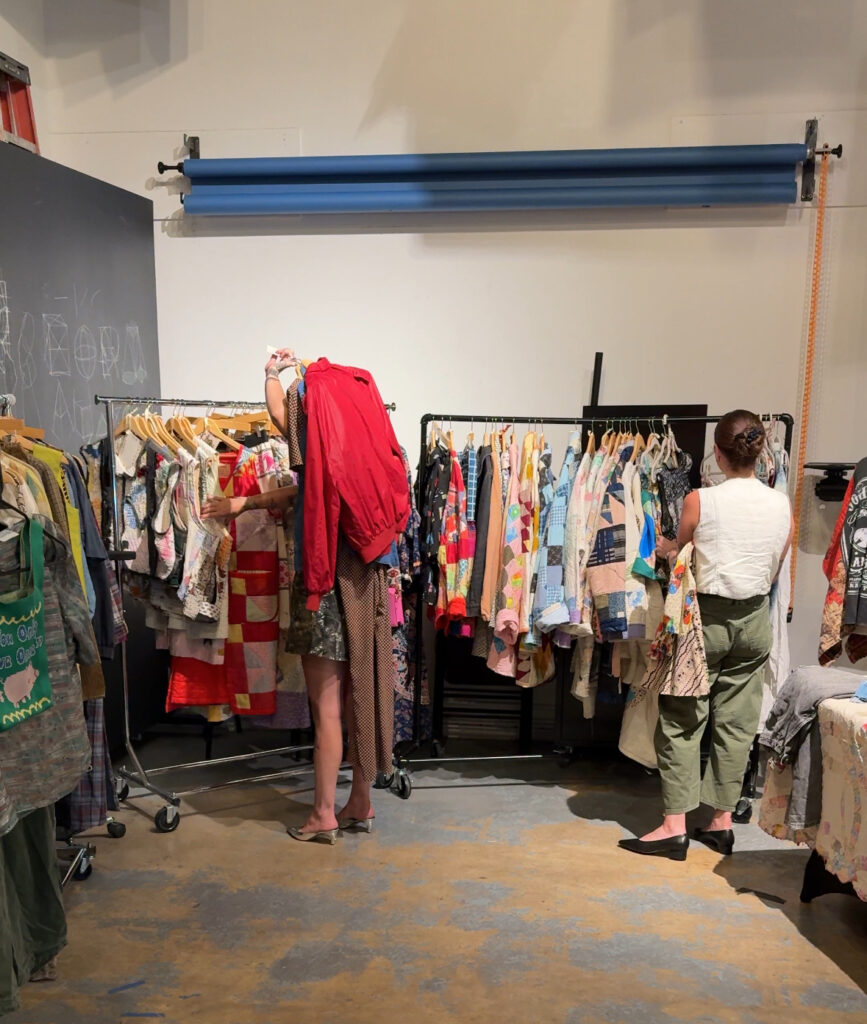
Last fall, I discovered Material Union on Instagram and began following founder Christa Clark’s vision to create a textile recycling facility in Austin. She imagined a community-driven, worker-owned cooperative that could transform old, unusable textiles into sustainable products and redefine the meaning of “waste.”
When Christa put out a call for collaborators, I jumped at the chance. Today, I serve on the Executive Steering Committee alongside five incredible women, helping to guide everything from fundraising and community partnerships to facility design and program strategy.
We’re still in the early stages—funding the work through grants and our own upcycled collections—but the vision is big: keep fabrics in circulation, create green jobs, and make repair skills part of everyday life.
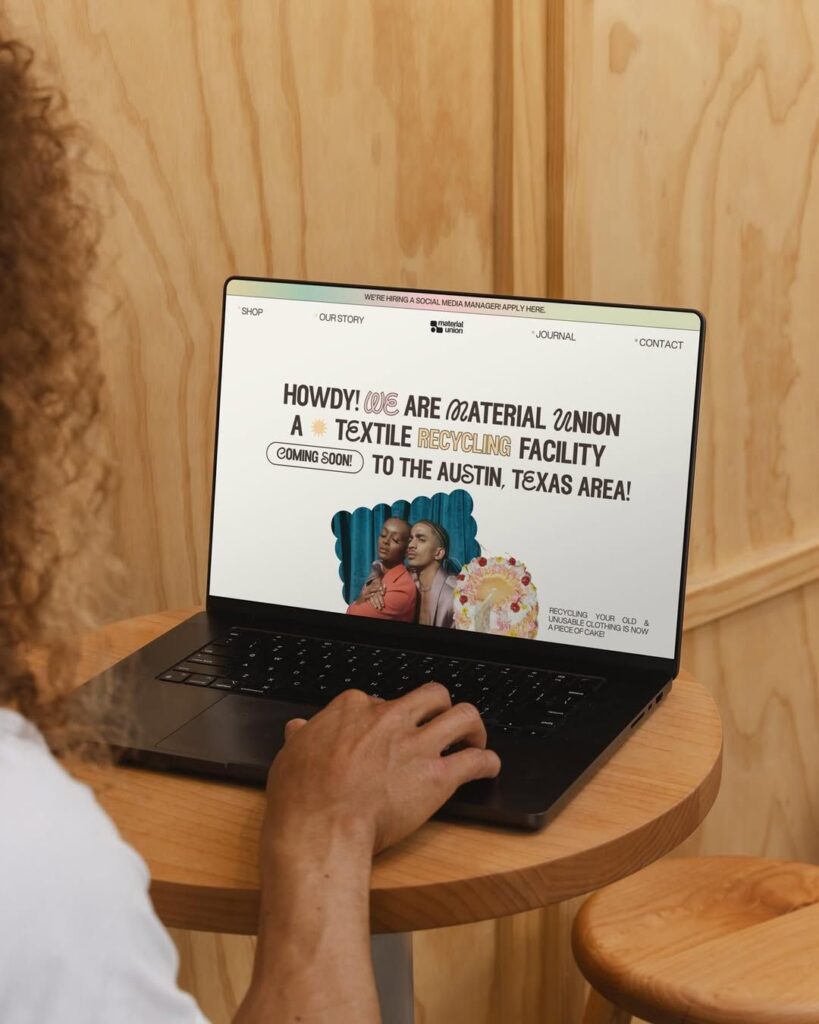
By late 2025, we plan to open a first-of-its-kind textile recycling facility—complete with a retail space and mending center—a vibrant hub where:
- Donated textiles are sorted and reimagined into upcycled garments, home goods, insulation, and beyond.
- A marketplace supports locally made products with fair-wage employment at its core.
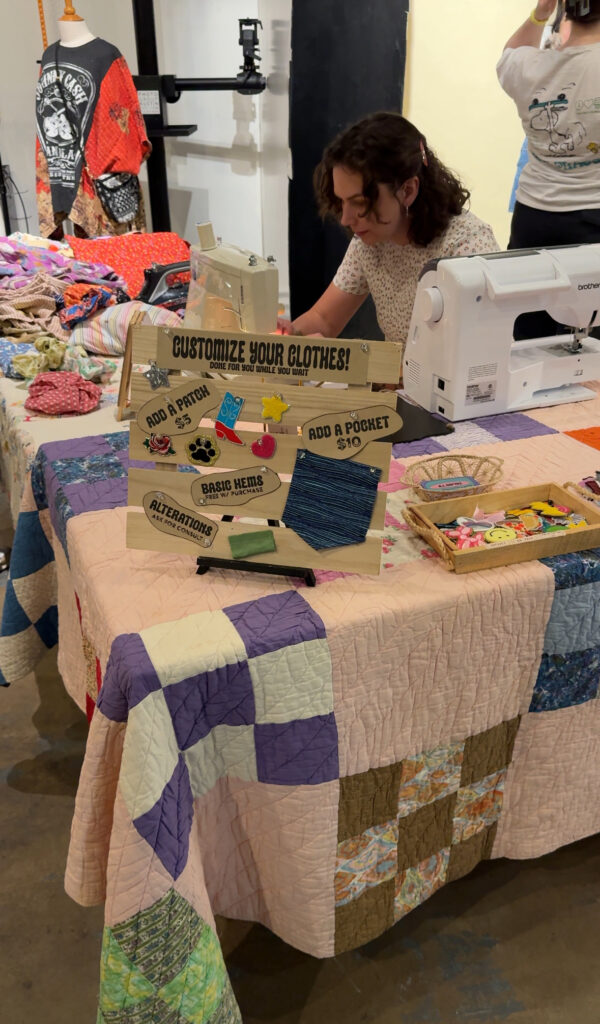
- The community gathers for free mending nights, affordable workshops, and circular economy events.
- A production studio and wholesale model supplies reclaimed fabrics and bulk options to designers and makers.
This isn’t just about recycling—it’s a circular, community-led reimagining of waste.
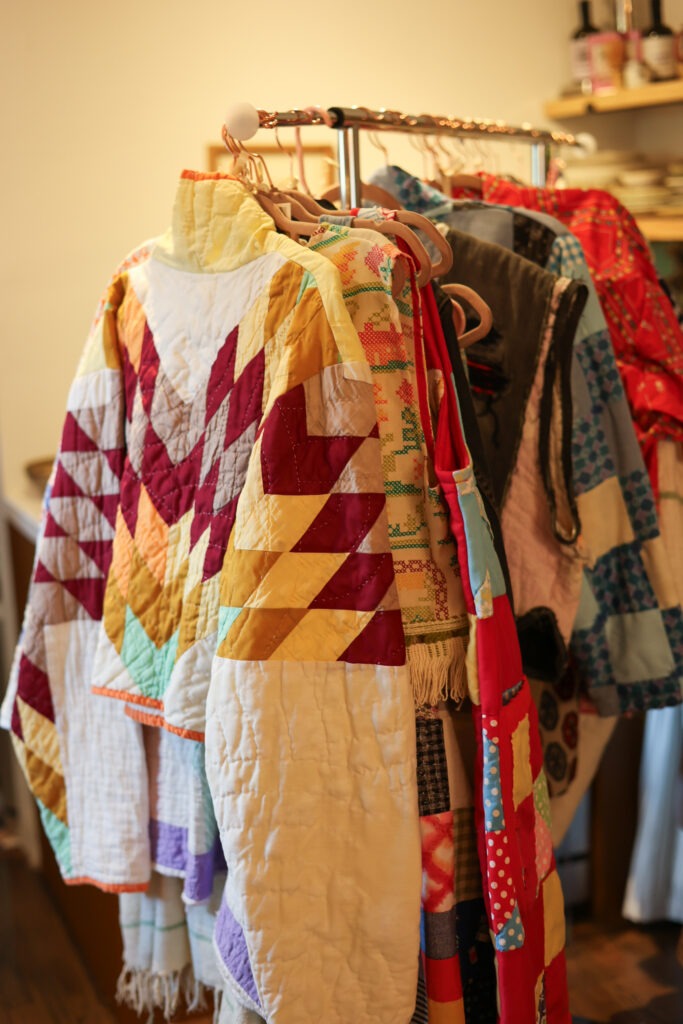
Want to support our business? Shop our upcycled handcrafted garments.
A talented team of sewists make each piece from reclaimed textiles right here in Austin. Not looking to add to your wardrobe? Follow us on Instagram and share our story!
Why Material Union matters now
Extending the life of clothes by just nine months reduces their carbon, water, and waste footprint by 20–30%. Scaling up textile recycling means less pollution, fewer landfills filled with clothes, and more opportunities for sustainable production.
But right now, Texas isn’t even close.
- In 2019, only 12,567 tons of textiles were recycled statewide—down 24% from 2015—even as recycling volumes across Texas grew by 3.7 million tons (TCEQ RMDP).
- Only two facilities reported textile recycling data, underscoring the lack of infrastructure and visibility.
- Nationally, less than 15% of textiles are reused or recycled, while the average American discards 91 pounds every year (EPA, ATRS).
- Textile production has doubled since 2000, while landfill disposal of textiles has increased by 70%—compared to just 6% growth in overall landfill waste (Take Care of Texas).
This isn’t just waste—it’s a missed opportunity. Recycling overall generated nearly $5 billion in economic output and supported 23,000 jobs in Texas in 2019.
Closing the textile recycling gap could unlock new jobs, feedstocks for local manufacturing, and high-value reuse markets—just as we’ve seen in paper, metals, and organics.
The state has already flagged textile processing and end-use as a high-priority area, pointing to barriers like contamination, cheap landfill disposal, inconvenient access, and weak secondary markets. Everyone knows this is a problem, but almost no one is tackling it.
That’s where Material Union comes in.
By building the first facility of its kind in Texas, we’re addressing a recognized statewide priority while proving that circular infrastructure doesn’t have to be corporate-led. It can be community-owned, worker-driven, and economically regenerative.
Textile recycling isn’t just a “nice to have.” It’s climate action, resource preservation, and local economic development—all stitched together. And by making it happen here, we have the chance to create a model that can be replicated nationwide.
What’s next for Material Union
We have a lot on the horizon. We’re scouting locations for our first facility, forging partnerships, and deep in grant submission mode.
And momentum is already building:
- 1,000+ lbs of textiles upcycled
- 30,000+ lbs of clothing redistributed to unhoused and refugee communities over the past year
- Partnerships with the City of Austin’s Circular Economy Department and the Austin Cooperative Business Association
- Active participation in Austin’s circular economy and slow fashion movement through events, panels, podcasts and swaps
I joined Material Union because I didn’t just want to write about slow fashion or participate in the community on an individual level—I wanted to help build the infrastructure that makes it possible. We’re still in the early stages, but the momentum is real, and being part of it has reminded me that big problems are solvable when we come together to create a solution.
Stay tuned—I’ll be sharing more on this journey, and of course, how it ties back to the way we shop, dress, and live. The future of fashion isn’t just about what’s in our closets. It’s about what we can imagine beyond them.

Leave a Reply